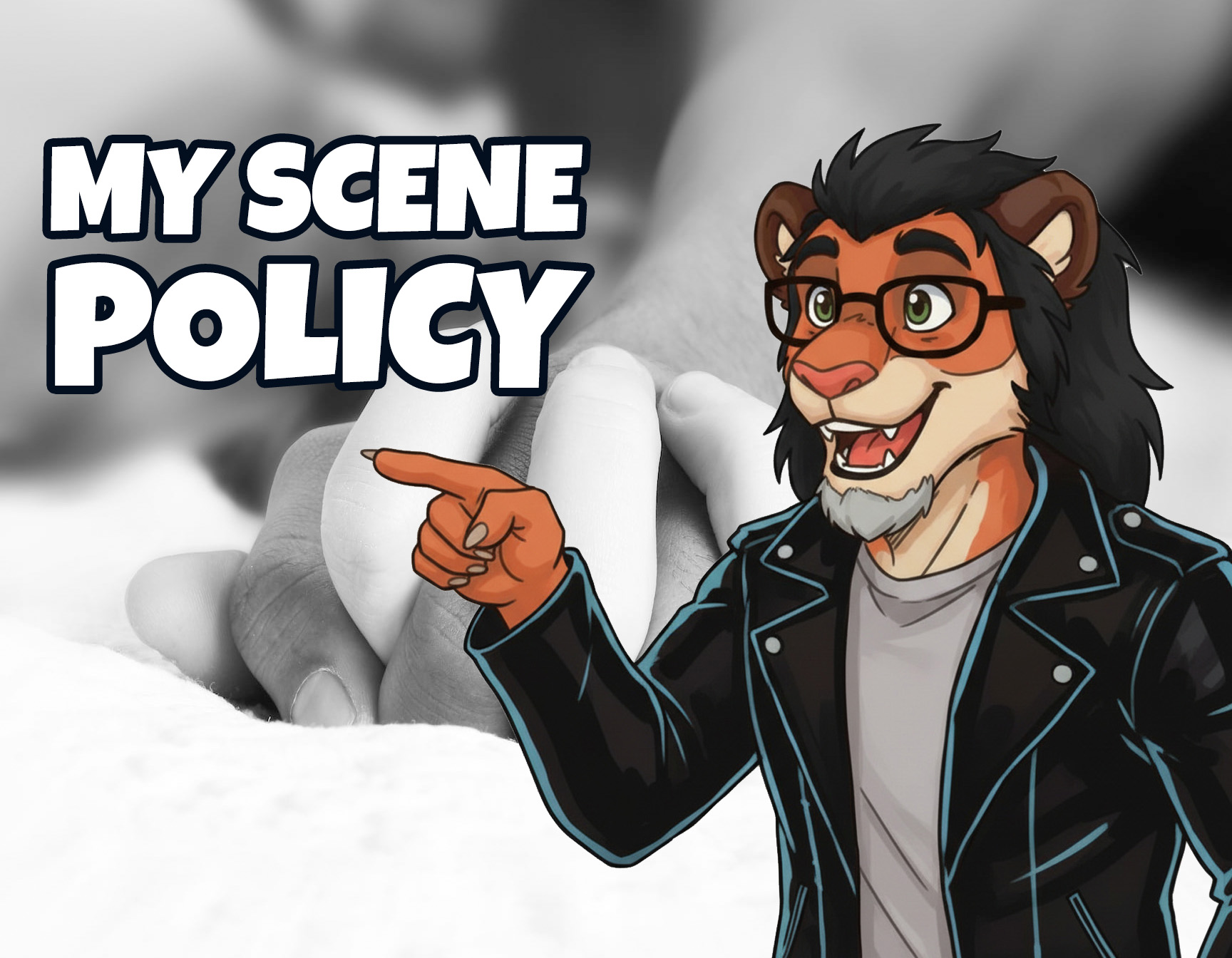
Hey everyone, it’s Crinkle Cat! If you’ve been to my events or familiar with my content, you know I’ve been immersed in this community for over 20 years. That’s a long time to navigate the highs and lows, build connections, and learn what makes our little (pun intended) corner of the world so special. At its core, AB/DL thrives on open communication and deep intimacy. Whether it’s age regression, diaper play, or any of the fuzzy babyfur vibes, these experiences put us in incredibly vulnerable spots. Vulnerability like that demands trust — trust between partners, trust in the scene, and trust in ourselves.
As someone who proudly identifies as a dad and caregiver, I host events, room parties, and all sorts of gatherings where folks come to me expecting a safe, quality experience. I take that responsibility seriously because I know how much you’re putting on the line when you let your guard down. Over the years, I’ve fielded a lot of questions about how I approach intimacy and scenes, so I figured it was time to lay it all out in one straightforward post. This is my personal policy. Think of it as a guide to how I operate, to help set expectations and keep things positive for everyone involved.
Consent and Communication: The Foundation of Everything
First and foremost, let’s talk about the big one: consent. I fully embrace the principles of Safe, Sane, and Consensual (SSC) — or Risk-Aware Consensual Kink (RACK) when appropriate — because our play often involves elements of vulnerability, power exchange, and emotional depth. Despite all the teasing, role-playing, and my own eclectic interests, I will never assert myself or get aggressive with anyone unless they’ve explicitly asked me to and given clear, enthusiastic consent beforehand.
I get it. Fantasies often involve that dominant figure who swoops in, sweeps you off your feet, or pins you against the wall without a second thought. It’s hot in theory, but in practice? Not without your say-so. I’ve always believed that in any dynamic, especially in caregiver/little or ABDL scenes, the submissive partner (or little) holds the real control. You’re the one who sets the parameters, defines the boundaries, and decides what the experience looks like.
You need to tell me what you want. As much as I’d love to claim some mind-reading superpower (wouldn’t that make things easier?), I don’t have it. Communication is key! Spell it out for me. What are your hard limits? Soft limits? Must-haves? Triggers or things to avoid? Safewords (or safe signals if verbal isn’t possible during heavy regression)? How do you want aftercare handled? The more details you share upfront, the better I can tailor the scene to make it amazing, safe, and fulfilling for both of us.
This isn’t just about avoiding misunderstandings; it’s about building genuine trust and ensuring ongoing, enthusiastic consent. Consent can be withdrawn at any time — no questions asked — and I’ll honor that immediately. If we’re not on the same page from the start (and throughout), things can go sideways fast. So, before we even think about diving in, let’s chat openly. DM me, talk it out at an event —whatever works. But know that without that clear green light, nothing happens.
Logistics: Preparation Makes Perfect (or at Least Possible)
Okay, consent’s covered. Now let’s get practical. Scenes don’t just magically happen; they require some behind-the-scenes work. Before anything kicks off, we need to nail down the logistics. Do we have enough supplies (diapers, changing gear, toys, props, wipes, powder — whatever’s essential for your fantasy)? Do we know the time and place? Is the environment safe and private? Can we actually schedule this without it clashing with real life or responsibilities?
I’ve been in plenty of situations where potential partners reach out, commit to the scene, and give full consent to the conditions we’ve discussed. But then, when I show up (or we’re about to start), things aren’t ready. Maybe the core materials are missing, or the setup isn’t what we agreed on. Look, I specialize in improvisation. I’m great at rolling with the punches and making magic out of the moment within the confines of a well-defined scene. If you’ve given me the latitude to freestyle a bit, awesome! I can adapt and keep the energy flowing.
But if the basics aren’t there — if conditions aren’t met, supplies are AWOL, or safety feels compromised — I reserve the right to bow out entirely. It’s not about being difficult; it’s about ensuring the scene is truly safe, enjoyable, and true to what we both want. Half-baked setups can lead to awkwardness, frustration, skin issues from poor hygiene, emotional drop, or worse — compromised safety. I’d rather reschedule, adjust plans, or pass than force something that doesn’t feel right.
Aftercare and Emotional Responsibility
After any scene — whether it’s light and playful or deep and regressive — I prioritize aftercare. This might include cuddles, hydration, snacks, gentle reassurance, talking through feelings, or helping you transition back to “big” space if needed. I expect us to check in afterward (and even the next day) to make sure you’re feeling okay emotionally and physically. If something felt off or you need more support, tell me. I’m here for that too!
I also take my own aftercare seriously as a caregiver. Hosting events and scenes means I give a lot emotionally, so mutual care helps everyone stay healthy and happy in the long run.
Navigating Group Spaces and Communication with Others
One aspect of our community that deserves its own spotlight is how we communicate when multiple people are sharing the same physical or virtual space — whether that’s a room party, a hotel suite hangout, a group chat, or an event lounge.
I love to tease. Playful teasing, gentle ribbing, silly nicknames, and lighthearted commentary are some of my favorite ways to keep the energy flowing and help people feel seen and engaged in the moment. When I tease or banter with someone, it’s always meant to include and uplift the person I’m directing it toward — not to exclude or diminish anyone else who happens to be nearby.
That said, I’m very aware that group dynamics can feel uneven. In a busy room party or a crowded chat, it’s easy for someone to feel momentarily left out if the conversation or attention seems to center on one or two people at a time. That feeling is valid, and I never want anyone to walk away thinking they were deliberately sidelined or ignored.
Here’s the honest reality: I can’t give every single person my full attention simultaneously. No one can. At any given moment I’m interacting with whoever is actively engaging with me right then — through eye contact, a direct message, a question, a laugh, or a shared little moment. My focus naturally follows the flow of those real-time connections. That doesn’t mean I value anyone less; it just means human bandwidth has limits.
My approach is simple: I do my best to spread warmth, acknowledgment, and care as broadly as I can within the constraints of the moment. If I’m deep in a one-on-one scene or caregiving moment with someone, I’ll usually try to give subtle signals to the room (a quick smile, a wave, a “be right with you” gesture) so others know they’re still seen. If someone feels overlooked or wants to jump into the conversation, I welcome them to do so — say something, ask a question, join the teasing, or pull me aside. I’m happy to pivot and include more people when the energy allows.
If you ever feel left out or uncertain in a shared space, please don’t hesitate to let me know, privately if you prefer. A quick “Hey, feeling a little on the outside looking in” goes a long way. I’ll adjust where I can, check in, or make space for you. Open communication isn’t just for scenes; it’s for the whole community experience.
We’re all here because we want connection, playfulness, and care. I’m committed to doing my part to make sure as many people as possible feel welcomed and valued — even if it’s one smile, one tease, or one check-in at a time.
While I’m always open to hearing when someone feels left out and will gladly make adjustments when I can, I will not tolerate repeated complaints about feeling “left out” being used as leverage to interrupt, derail, or pull me away from ongoing conversations, scenes, or moments with other partners and people especially after those feelings have already been acknowledged and addressed multiple times. Respect flows both ways: just as I strive to be inclusive and attentive within the limits of the moment, I expect mutual respect for the boundaries and connections of everyone else in the space. Persistent attempts to monopolize attention or weaponize feelings of exclusion undermine the group dynamic and make it harder for everyone to feel safe and cared for. If this becomes a pattern, I will set firmer boundaries to protect the experience for all involved.
Why This Matters to Me (and Hopefully to You)
At the end of the day, this policy comes from two decades of experience. I’ve seen the incredible joy that comes from well-executed, consensual scenes and the hurt that can stem from miscommunications, unmet expectations, or overlooked boundaries. As a content creator, event host, and caregiver, I want every interaction to be positive, empowering, nurturing, and fun. If you’re in the AB/DL or babyfur community, you deserve that too — nothing less.
I strive to be a responsible, reliable scene partner: someone who listens, respects limits, communicates clearly, prioritizes safety and consent, and follows through with care. If this resonates with you, sparks questions, or you’d like to discuss a potential scene, hit me up in the comments or via DM. Let’s keep the conversation going—after all, that’s what makes our community so strong.
Stay padded, stay safe, communicate openly, and remember: trust, consent, and care are the real superpowers here.
Thanks for reading!
| If you like this post, check out my other guides. And be sure to tag me on Bluesky at @crinklecattales.com if you have anything else you feel I should add to this post. |